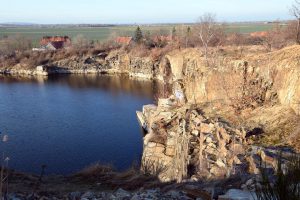
Sichów is located in the northeastern part of the Kaczawskie Foothills, in the zone of the fading marginal zone of the Foothills. Directly to the south of the village, there are several hills made of basalt, with the most prominent one being Krzyżowa Góra (268 m), where you can observe well-defined columnar basalt formations.
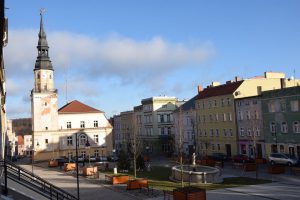
The village was founded at the turn of the 12th and 13th centuries and it was then owned by the Cistercian monastery in Lubiąż. In the first half of the 20th century, the local palace and estate belonged to the von Richthofen family, and the palace housed a collection of artworks and souvenirs from travels to various parts of the world. At the end of World War II, looted artworks from Krakow and Warsaw were stored here. During the fighting in 1945, the palace and the Evangelical church burned down and were subsequently demolished. The Church of the Immaculate Conception of the Blessed Virgin Mary was built at the end of the 13th century in a style that combines Romanesque and Gothic elements.
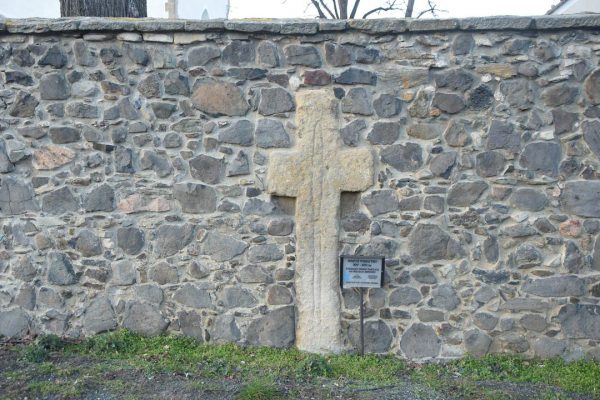
In the church wall, there is a stone cross of reconciliation, measuring 222 cm in height and 73 cm in arm span – it is one of the tallest known objects of this type. On the shaft, a halberd – a murder weapon – is visible. The ruins of the palace are surrounded by the remains of the palace park, enclosed by a wall with bastions. In the park, you can find numerous monumental trees, including American tulip trees (including the thickest one in Poland), pedunculate oaks, lindens, chestnut trees, plane trees, and yews.
Description: Piotr Migoń