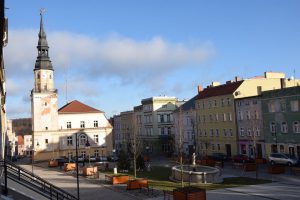
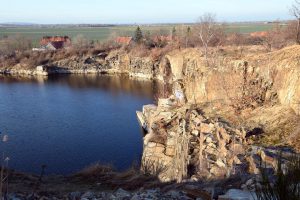
Rarely visited Rząśnik lies in a diverse landscape and geologically varied area, on the border of the Kaczawskie Foothills and the Kaczawskie Mountains. Its history dates back to the late Middle Ages, with the first mention dating back to 1267. From those distant times comes the local Church of the Holy Trinity, expanded in the early 16th century in the Gothic style, and later rebuilt in the first half of the 18th century. Some elements of stonework date back to the times of the Romanesque-Gothic church (portals, window frames). Stone epitaphs from the 18th century stand by the tower, and nearby are the remnants of the cemetery.
Opposite the church, there are ruins of a Baroque palace built in the first half of the 18th century. At the time, it was considered one of the most magnificent and valuable residences in the Kaczawskie region. It was designed by Martin Franz from Tallinn, the author of projects for the so-called “churches of grace” in Jelenia Góra and Kamienna Góra, among others. Still in use after World War II, it was abandoned in the 1960s and has since been progressively deteriorating. In Rząśnik, there was an evangelical prayer house from 1748, constructed in a half-timbered style with brick infill. Unused after World War II and converted into a warehouse, it decayed. The remains of the deteriorating building were dismantled, preserved, and reconstructed near the palace in Łomnica near Jelenia Góra. It’s worth noting the residential and farm buildings with a mixed masonry and half-timbered construction.
Description: Piotr Migoń